For decades, video games were often viewed as entertainment designed to help people escape reality. But as gaming has evolved into a global social phenomenon, that perception is becoming harder to maintain.
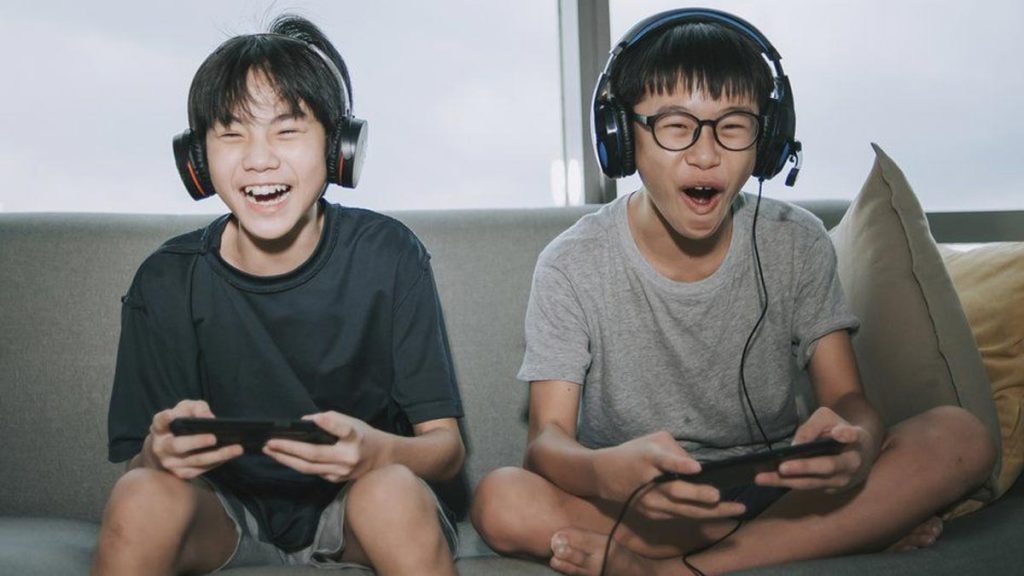
Today, millions of players regularly interact with people from countries they may never have visited. They team up with strangers, communicate through voice chat, share strategies, celebrate victories, and sometimes build friendships that continue long after a game ends.
That raises an interesting question: Can video games actually change the way we see people from other countries?
The answer may be more complicated than simply saying yes or no.
Gaming Has Created a Truly Global Meeting Place
One of the most interesting aspects of modern gaming is how easily it removes geographical boundaries.
A player in Indonesia can join the same match as someone in Japan, Brazil, Germany, the United States, or South Korea. In many multiplayer games, nationality becomes almost irrelevant once the match begins.
Players are judged primarily by how they communicate, cooperate, and play.
Someone who initially appears to be a complete stranger can quickly become a teammate who is trusted to defend an objective, provide resources, or make an important play.
That experience can create something that traditional media sometimes struggles to provide: direct interaction with people from different backgrounds.
Instead of simply reading about another country, players can actually talk to someone who lives there.
The Stranger Suddenly Becomes a Person
International relationships often begin with something surprisingly simple.
A player might ask, “Where are you from?”
The answer could lead to another question: “What time is it there?”
Then perhaps a conversation about school, work, food, music, football, movies, or everyday life follows.
These small interactions can challenge stereotypes.
Before meeting someone from another country, a player might have an abstract idea of what people from that country are like. After playing together for hours, that person is no longer an abstract stereotype.
They are simply another human being with a personality, sense of humor, frustrations, and ambitions.
This may be one of gaming’s most powerful social effects.
Cooperation Can Build Trust Faster Than Conversation Alone
Competitive games can be intense, but cooperation is often at the heart of multiplayer experiences.
In team-based games, players frequently have to depend on people they have never met.
You might need a teammate from another country to revive you, protect your position, share information, or coordinate an attack.
When that cooperation works, trust develops.
Importantly, that trust isn’t necessarily based on nationality, language, or cultural background. It is based on shared experience.
Two people who might have nothing else in common can suddenly discover that they make an excellent team.
That shared achievement can become a small but meaningful bridge between cultures.
Gaming Can Make Cultural Differences Feel Less Intimidating
People sometimes fear things they don’t understand.
Different languages, customs, accents, humor, and traditions can initially create distance. But repeated exposure can make those differences feel much more familiar.
Gaming naturally creates opportunities for that exposure.
A player may learn that a teammate celebrates a different holiday, eats different foods, uses different slang, or has a completely different daily schedule.
Over time, those differences can become interesting rather than intimidating.
The important part is that the learning happens organically.
Players aren’t necessarily sitting down for a formal lesson about another culture. They’re simply interacting with another person while trying to win a game.
But Gaming Doesn’t Automatically Eliminate Prejudice
There is an important limitation.
Video games aren’t automatically a force for peace.
Online gaming communities can also contain racism, nationalism, harassment, toxic behavior, and stereotypes. An international match can just as easily reinforce negative attitudes as challenge them.
Anonymity can make some players say things they would never say in person.
Language barriers can also create misunderstandings. A joke that seems harmless to one player might be offensive to another because cultural contexts are different.
So the positive impact of gaming depends heavily on the environment surrounding the game.
Healthy communities can encourage curiosity and friendship. Toxic communities can do the opposite.
Voice Chat Changes the Experience
There is a major difference between simply playing against an international player and actually communicating with them.
Voice chat can make interactions much more personal.
Hearing another player’s voice adds emotional context that text alone often lacks. Players can laugh together, celebrate unexpected victories, apologize after mistakes, or simply talk while waiting for the next match.
Those moments can gradually turn strangers into familiar faces—or familiar voices.
Even when players never meet outside the game, repeated interactions can create a genuine sense of social connection.
Games Can Also Encourage Curiosity About Other Countries
Sometimes the impact goes beyond the game itself.
A player might discover that their teammate lives in Thailand and become curious about Thai food. Another might meet someone from Brazil and start learning about Brazilian football culture. Someone else might become interested in Japanese language or Korean entertainment after developing friendships with players from those countries.
Gaming can therefore become a gateway to broader cultural curiosity.
The game isn’t necessarily teaching geography or history directly. Instead, it creates a personal reason to learn.
And personal motivation can be surprisingly powerful.
Virtual Worlds Can Bring People Together Around Shared Goals
Some games go even further by creating persistent communities.
Massively multiplayer online games, sandbox games, survival games, and competitive esports titles can bring together players who spend hundreds or even thousands of hours in the same virtual spaces.
Over time, these communities can develop their own traditions and social structures.
Players may organize tournaments, create online events, form clans, build virtual cities, or collaborate on enormous projects.
Nationality becomes only one part of someone’s identity.
Their role in the community may become more important.
They might be known as the player who always helps newcomers, the strategist who solves difficult problems, or the person who makes everyone laugh.
That can subtly change how people understand identity itself.
Esports Takes the Idea to Another Level
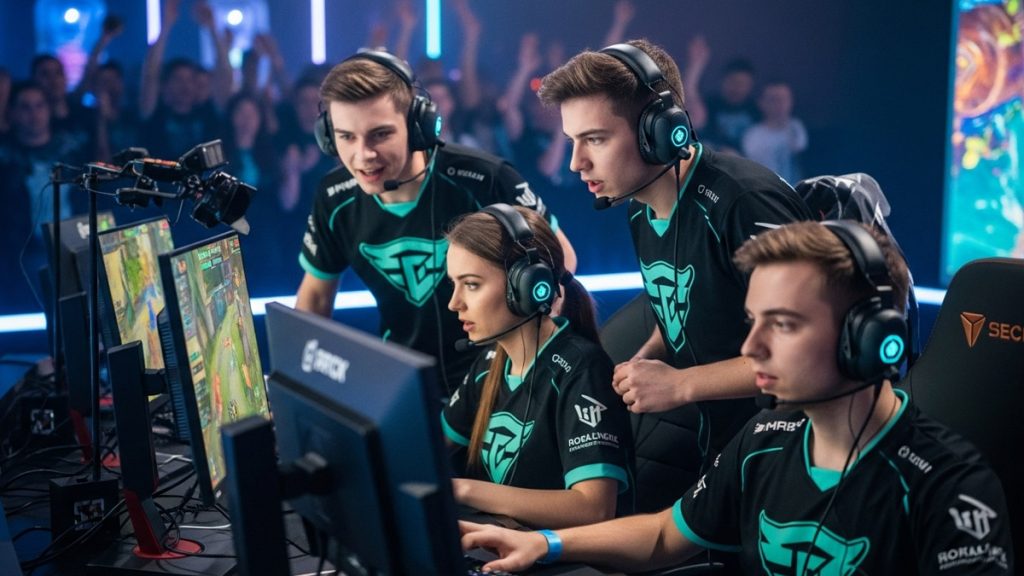
Esports provides perhaps the clearest example of gaming crossing national boundaries.
International competitions regularly bring players from different countries together under the same rules and competitive framework.
Fans may support players from countries they have never visited.
A tournament can create moments where national rivalries temporarily take a back seat to admiration for skill, teamwork, and sportsmanship.
This doesn’t mean geopolitical tensions disappear.
But it demonstrates that people can simultaneously recognize national differences and share common interests.
A player doesn’t have to stop being proud of their country to respect someone from another country.
The Most Important Change May Be Small
It’s tempting to imagine that video games could completely transform international relations.
That’s probably unrealistic.
A few matches won’t erase decades of political conflict or cultural misunderstanding.
But change doesn’t always have to be dramatic.
If millions of players have small positive interactions with people from other countries every week, those experiences can accumulate.
A teenager who grows up regularly playing with international teammates may naturally develop a different perception of the world.
Instead of thinking about countries as distant groups of unfamiliar people, they may think about them through personal connections.
“That’s where my teammate lives.”
“That’s where my friend is from.”
“That’s the country of the person who taught me that strategy.”
Those connections might seem insignificant individually, but collectively they can reshape how people understand the world.
Gaming’s Greatest Power May Be Making Distance Feel Smaller
Video games cannot solve every problem between countries.
They cannot replace diplomacy, education, travel, or real-world cultural exchange.
But gaming has one unique advantage: scale.
A person doesn’t need a passport to interact with someone from another side of the planet.
They don’t need to attend an international conference.
They don’t even need to leave their bedroom.
They simply need to press “play.”
And somewhere on the other side of the connection, another person is doing exactly the same thing.
Perhaps that is where gaming’s cultural power really lies.
It doesn’t necessarily make everyone think alike.
Instead, it gives people opportunities to discover that someone who seems different on the surface can still be remarkably familiar underneath.
In a world where international divisions can sometimes feel increasingly visible, that simple realization may be more valuable than it appears.