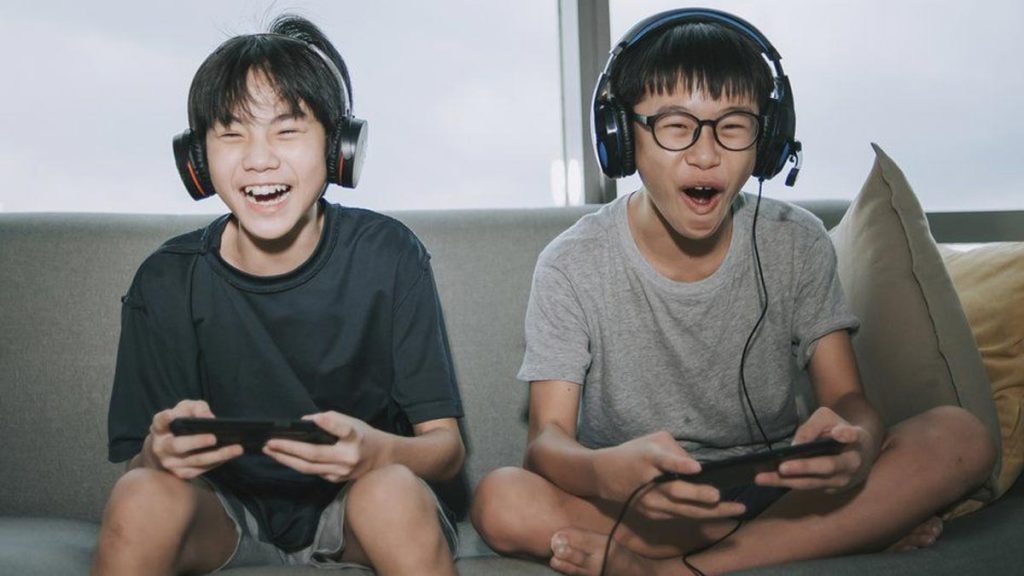
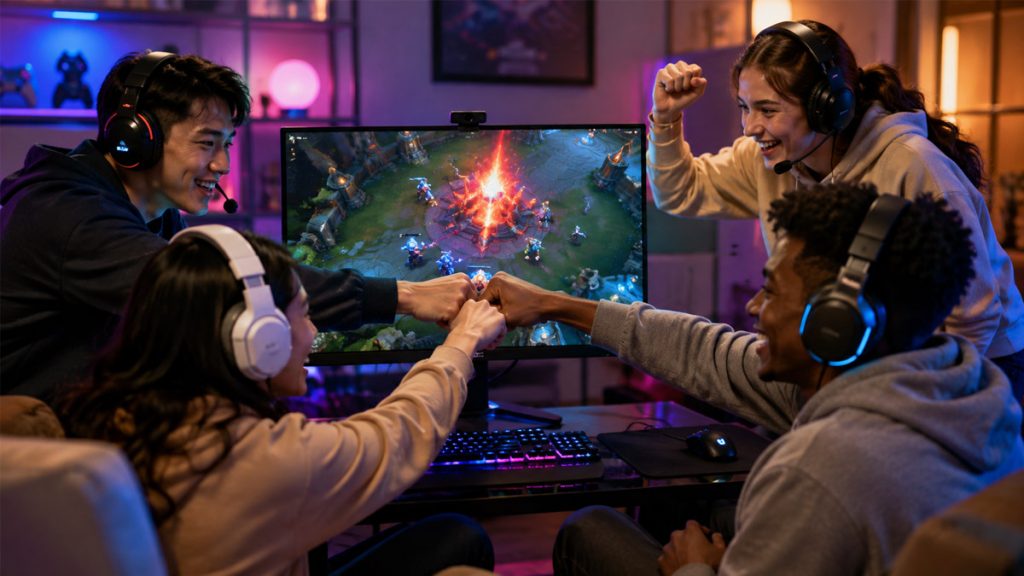
Not every friendship begins with a conversation.
Sometimes, it starts with a random teammate, a last-second comeback, a shared victory—or even a frustrating loss that somehow becomes a funny story.
As gaming continues to evolve, video games are becoming more than entertainment. They have turned into digital meeting places where people who have never met can communicate, cooperate, compete, and eventually form genuine friendships.
In a world where many social interactions increasingly happen online, gaming offers something surprisingly powerful: a shared experience that gives strangers an immediate reason to connect.
Games Give Strangers Something to Talk About
Meeting someone new online can be awkward. There is often the question of what to say first, how to start a conversation, or whether the other person will even respond.
Gaming removes much of that awkwardness.
When two players enter the same match, they already have a common interest. They might need to capture an objective, defeat an opponent, solve a puzzle, build something together, or simply survive until the end of a round.
The game itself becomes the conversation starter.
A simple “nice play” can turn into a longer conversation. A shared joke during a match can lead to adding someone as a friend. Eventually, a player who started as a complete stranger can become someone you regularly play with.
Cooperation Can Build Trust Faster Than Small Talk
One of gaming’s biggest strengths is cooperation.
In team-based games, players often have to depend on people they have never met. A successful match may require communication, timing, strategy, and trust.
Interestingly, these interactions can create connections without requiring players to immediately reveal personal information.
You might not know someone’s age, occupation, hometown, or background. But you know that they covered your position when you were vulnerable. You know they revived you during a difficult moment. You know they passed you the right item when you needed it.
Those small actions can create a sense of trust.
And sometimes, trust built through repeated gameplay becomes the foundation for a real friendship.
Gaming Creates Communities Beyond the Match
The connection doesn’t always end when the game does.
Modern gaming communities extend across Discord servers, livestreams, forums, social media, tournaments, fan communities, and creator platforms.
A player might discover a community because of one game and eventually become part of a much larger social circle.
This is particularly interesting because gaming communities can bring together people who would probably never meet in everyday life.
Someone in Jakarta can play with someone in Tokyo. A university student can team up with a professional. A casual player can become friends with someone on the other side of the world.
Geography becomes far less important when the shared interest is already there.
Gaming Can Make Differences Feel Smaller
People come into games with completely different backgrounds.
They may speak different languages, live in different countries, have different cultures, or have very different lifestyles.
Yet once the match begins, everyone may be working toward the same objective.
That doesn’t mean gaming eliminates differences. It simply creates a temporary environment where those differences are not always the most important thing.
The question becomes less about who someone is in the offline world and more about what the two of you can accomplish together.
That can be a powerful way to create understanding.
Why Random Encounters Can Become Memorable
One of the most fascinating parts of online gaming is its unpredictability.
You can log in expecting to play for 30 minutes and unexpectedly meet someone you’ll remember for years.
Maybe your team was losing badly before making an incredible comeback. Maybe a random player helped you through a difficult level. Maybe someone made the entire lobby laugh during an otherwise ordinary match.
These moments are memorable precisely because they weren’t planned.
Unlike traditional social settings, gaming constantly creates opportunities for spontaneous interaction.
A stranger appears, you share an experience, and then you decide whether to continue the relationship.
Voice Chat Changed the Experience Again
The introduction and widespread adoption of voice communication made online gaming feel considerably more social.
Text chat can communicate information, but hearing someone’s voice adds personality to an interaction.
A teammate’s excitement after winning a difficult round feels different from reading a message on screen. A joke can instantly change the mood of an entire team.
Voice communication also makes coordination faster, which can strengthen the feeling that players are actually working together rather than simply controlling characters in the same digital environment.
For many players, the people they meet through voice chat eventually become as important as the games themselves.
Gaming Is Also Becoming a Shared Cultural Experience
Gaming is no longer a niche hobby.
Major game launches can become global cultural events. Esports tournaments attract massive audiences. Game characters become recognizable outside gaming circles. Streaming platforms have transformed individual gameplay into entertainment watched by millions.
As a result, gaming provides an increasingly large pool of shared references.
Two strangers might have nothing else in common but still immediately understand a joke about a famous game mechanic, recognize the same character, or debate which game has the better soundtrack.
Shared culture creates another bridge between people.
But Connection Doesn’t Always Mean Friendship
It’s important to remember that not every gaming interaction becomes meaningful.
Online communities can also experience toxicity, harassment, arguments, and misunderstandings. Anonymity can sometimes encourage behavior that would be less likely in face-to-face interactions.
That is why healthy gaming communities matter.
Moderation, inclusive communities, respectful communication, and good community design can make a significant difference in determining whether gaming becomes a positive social experience or a frustrating one.
The technology creates the opportunity to connect, but people ultimately decide what kind of community they build.
The Future of Gaming May Be Even More Social
Gaming is moving toward increasingly immersive experiences.
Virtual worlds, persistent online communities, live events, social platforms, and new forms of multiplayer interaction are making games feel less like isolated software and more like digital spaces where people spend time together.
The next generation of gaming may therefore focus not only on better graphics or more sophisticated mechanics, but also on creating better ways for people to interact.
That could make gaming one of the most important social platforms of the digital era.
Sometimes, a Game Is All It Takes to Start a Friendship
The most powerful thing about gaming may not be the graphics, competition, or technology.
It may simply be the ability to put two strangers in the same virtual space and give them something to experience together.
A match can become a conversation.
A conversation can become a friendship.
And a friendship that begins with two random players on opposite sides of the world can eventually become something much bigger than the game itself.
In that sense, gaming isn’t just about playing together.
It’s about giving people a reason to connect.
FAQ
Why do video games help people make friends?
Video games create shared goals and experiences that make communication easier. Players can cooperate, compete, and interact naturally without needing to start with traditional small talk.
Can gaming connect people from different countries?
Yes. Online multiplayer games allow players from different countries and cultures to interact in the same digital environment, often creating friendships that would be unlikely to happen offline.
Why is teamwork important in online gaming?
Teamwork encourages communication, trust, coordination, and mutual support. These interactions can help players develop stronger social connections over time.
Is gaming becoming a social platform?
Gaming is increasingly functioning as a social platform through multiplayer games, voice chat, livestreaming, communities, virtual events, and platforms built around shared gaming interests.
Can friendships made through gaming become real-life friendships?
Absolutely. Many online friendships continue beyond gaming and develop into long-term relationships, especially when players regularly communicate and share experiences outside the game.