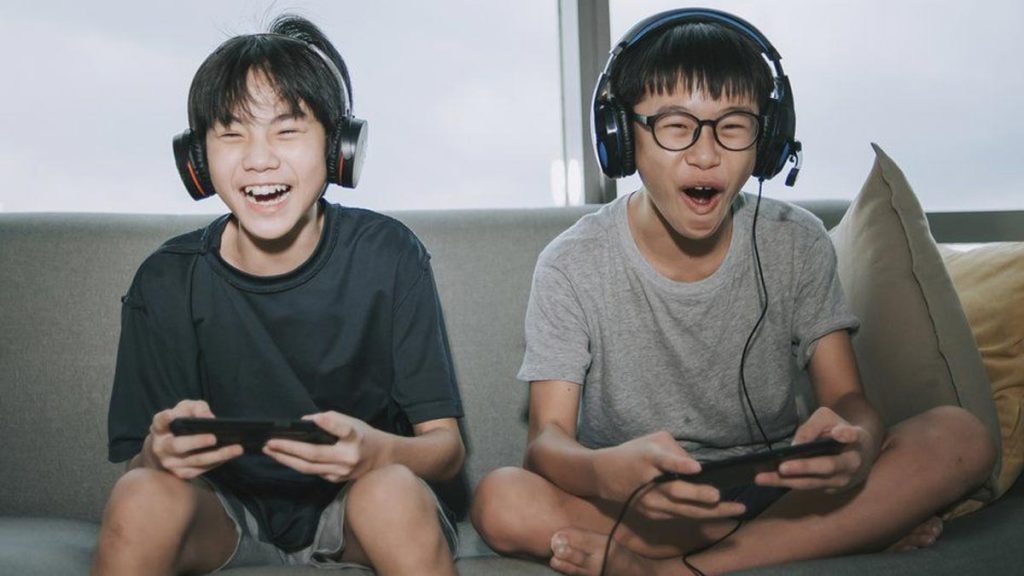
A player in Indonesia joins a match with someone in Brazil. Another player from Japan teams up with someone in Germany. They may speak different languages, come from completely different cultures, and live thousands of kilometers apart.
Yet inside a game, they can become teammates within seconds.
This is one of the most fascinating things about modern gaming. Video games are no longer simply entertainment played in isolation. Online gaming has created enormous virtual communities where people from different countries can meet, communicate, compete, cooperate, and sometimes build genuine friendships.
In many ways, gaming has become a digital meeting place without traditional borders.
A Shared Game Can Become a Shared Language
Language is one of the biggest barriers between people from different countries. But gaming can sometimes reduce that barrier.
Players do not always need perfect language skills to understand one another. A quick message, an in-game signal, a movement toward an objective, or a simple gesture can communicate what needs to happen.
Over time, players often develop their own vocabulary.
Words such as “rush,” “defend,” “heal,” “follow,” or “wait” can become universally understood within a particular gaming community. Even when players struggle to communicate in everyday conversation, they may still understand each other perfectly during a match.
The game itself becomes a shared language.
Multiplayer Games Turn Strangers Into Teammates
One of the most powerful aspects of online gaming is how quickly it can transform strangers into collaborators.
A player may enter a lobby knowing absolutely nothing about the people around them. Within minutes, however, everyone may have a common objective.
They need to defend a location, defeat an opponent, solve a puzzle, complete a mission, or survive until the end.
That shared purpose can remove some of the social distance that normally exists between strangers.
Instead of starting with questions about nationality, age, occupation, or background, players start with a much simpler question:
“How can we win this together?”
Gaming Communities Can Cross Cultural Boundaries
Every country has its own traditions, humor, communication styles, and social norms. Online gaming brings many of those differences into the same virtual environment.
At first, those differences can create misunderstandings.
A joke might not translate properly. A particular communication style might seem rude to another player. Different expectations about teamwork can also lead to frustration.
But repeated interaction can create familiarity.
Players begin learning how other people communicate. They discover different expressions, cultural references, celebrations, and perspectives.
Something that initially seems unfamiliar can eventually become normal.
That process can help people become more comfortable interacting with individuals from backgrounds different from their own.
From Teammates to Friends
Not every online gaming relationship becomes a friendship, but some do.
Players who regularly meet in the same games may eventually move their conversations beyond the match. They might discuss music, movies, food, sports, school, work, or everyday life.
A relationship that begins with a five-minute multiplayer session can eventually develop into a long-term friendship.
The interesting part is that geography becomes almost irrelevant.
A friend might live on another continent, but they can still be online at the same time, play together every weekend, and share experiences regularly.
Gaming technology has made distance feel much smaller.
Esports Has Created a Truly Global Community
The international nature of gaming becomes even more visible through esports.
Competitive gaming brings players, teams, coaches, and fans from different countries into the same ecosystem. Major tournaments can attract audiences from across the world, while professional teams often include players with different national backgrounds.
Fans may support a team because of its playstyle rather than because it represents their own country.
This creates an interesting cultural dynamic. A viewer can become a fan of a player thousands of kilometers away simply because they admire the player’s skill, personality, or story.
Competition creates rivalry, but it can also create shared excitement.
Gaming Lets People Experience Other Perspectives
Games can also introduce players to stories and worlds inspired by cultures they may know little about.
A game might explore a particular country’s mythology, architecture, history, music, or social traditions. Players who encounter those elements through entertainment may become curious enough to learn more.
Of course, games should not be treated as perfect representations of real cultures. Developers can simplify, fictionalize, or reinterpret cultural material.
Still, gaming can serve as a starting point for curiosity.
A player discovers something unfamiliar in a game, searches for more information, and suddenly learns about a culture they might never have encountered otherwise.
Online Communities Are Not Automatically Positive
The global nature of gaming also comes with challenges.
Large online communities can experience toxicity, harassment, discrimination, and cultural misunderstandings. The anonymity of the internet can sometimes make people behave in ways they would avoid in face-to-face interactions.
That is why creating genuinely inclusive gaming spaces requires effort.
Game developers, community moderators, tournament organizers, streamers, and players all have roles to play. Clear rules, effective moderation, accessible communication tools, and a culture of respect can make online communities more welcoming.
Technology can connect people, but people still determine what those connections become.
The Next Generation of Global Communities
As games become more social, the boundary between gaming and communication continues to disappear.
Modern games can function as social spaces where people gather even when they are not focused entirely on winning. Players can explore virtual worlds, attend digital events, watch performances, create content, or simply spend time together.
This suggests that the future of gaming may involve much more than traditional matches.
Games could increasingly become places where people meet, exchange ideas, celebrate cultural differences, and build communities.
The screen may be digital, but the relationships formed through it can be very real.
A World Connected One Match at a Time
Gaming will not eliminate cultural differences, language barriers, or geographical distance.
But it can create opportunities to cross those boundaries.
A multiplayer match might last only fifteen minutes. A conversation might begin with a simple strategy call. A random teammate might become someone you play with every week.
And sometimes, those small interactions can change how people see the world.
That is the real potential of gaming without borders.
The most important thing about connecting players from around the world may not be who wins the match. It may be the fact that people who would otherwise never meet now have a reason to play, communicate, and understand one another.